Building decarbonization strategy: It starts before electrification
January 04, 2024
January 04, 2024
Ask the experts: Two sustainability experts share insights on electrification’s role in building decarbonization and zero-carbon-ready design
A version of this blog first appeared as “Decarbonizing design: A conversation” in Stantec Design Quarterly Issue 19.
Building decarbonization is critical to address climate change. Antonino Lagana, who specializes in green buildings engineering—talks about the role of electrification in building decarbonization.
Antonino chatted with John Dugan, editor of the Stantec Design Quarterly, about the future and design’s role.
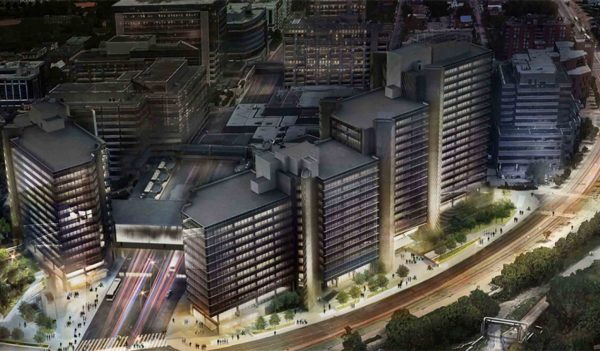
Place du Portage, Phase 3 in Gatineau, Quebec. Stantec provided mechanical, electrical, and structural engineering services. (Joint Venture: Stantec/BPA/Provencher Roy/Perkins&Will/Two Row Architects)
Antonino Lagana: I agree. The first step is energy efficiency, or the deep energy retrofit. You want a building to use energy efficiently. That’s the common denominator in all energy landscapes. I’ve delivered large and small zero-carbon buildings. And I’ve electrified as far as you can electrify. I’ve peak shaved with carbon-neutral alternative fuels and energy storage. In many places, the electrical grid cannot currently provide enough power to fully electrify a building or a community. So, we need carbon-neutral alternative fuels like renewable natural gas.
Let’s talk about peak shaving. There are two types of charges on your building’s electrical utility bill. There is a charge for the energy cents per kilowatt hours, and then there’s also the billing demand. The billing demand takes your monthly peak demand and slaps you with a charge for that. You want to shave that peak.
You can prevent that peak by using thermal energy storage, which is what we’re doing for the Place du Portage, a large Federal project in Quebec. Or we can use fuel like renewable natural gas, as I’ve recommended for the garage at Place du Portage. We cannot electrify the heating in the garage because it requires too much power and it’s sporadic.
Antonino: So, to make your building energy efficient, we called that zero-carbon-ready. Why? We sometimes think zero carbon means enough solar panels or a wind turbine on a property to supply all the energy required. But wind and solar are too variable and take up space. Battery storage beyond six to eight hours is often cost prohibitive. And they need maintenance.
The truth is that delivering zero-carbon buildings at scale is feasible where the utility provides affordable clean energy. In Quebec, where I live, we have a “best world scenario” with clean energy from the grid, cheap electricity from hydropower, and affordable, renewable natural gas. The renewable gas is coming from our brown bins, existing landfills, and farm waste. They’re injecting that methane into the natural gas network. The province of Quebec has made great strides in electrification and renewable gas. So much is dependent on the grid, so we need to talk about zero-carbon-ready buildings.
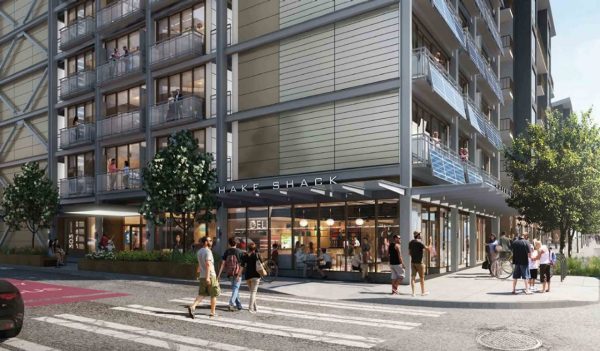
303 Battery in Seattle, Washington. Stantec provided mechanical engineering, plumbing, and energy-modeling services for the project. (Architect: CollinsWoerman)
Antonino: Everyone’s on board when there’s return on investment. ROI unifies everybody. There’s nothing wrong with doing a deep energy retrofit because it makes financial sense through energy savings and through timely equipment renewal. The approach varies from one energy landscape to another.
For example, where electricity is expensive, you can focus on reducing electricity consumption to get a quick payback period. In areas where natural gas is more expensive, you would focus on those retrofits. Measures that reduce your natural gas consumption, such as heat pumps, become more attractive.
In retrofits, you analyze each area of energy consumption. You examine each energy end use and find ways to reduce it. Typically, energy-service companies come into your building and look for ROI through energy savings and equipment renewal. But some clients like to go the traditional way and pay for their energy upgrade themselves. That’s because it’s less expensive for them in the long run.
We should think about reserving carbon-intensive fuel for industries that desperately need it. We should use alternatives when we can.
Antonino: Deep energy retrofits are the first step, the first brick in the wall. The US needs to get its energy consumption down, and buildings use a lot of energy. But we also must convert our energy supply to clean energy. There’s only so much clean energy right now. The US won’t be able to electrify transport and industry completely. It doesn’t have the supply or the infrastructure. So, the US needs to look at adding alternative fuels to its energy pie to reduce its emissions.
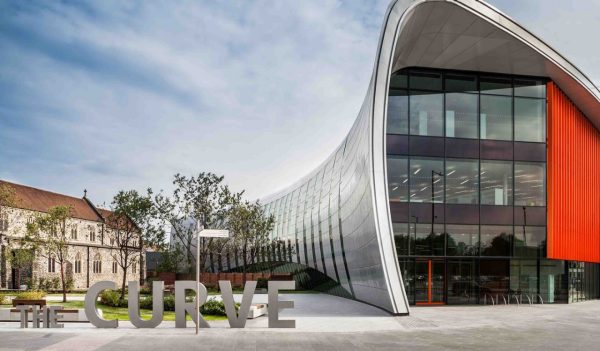
The Curve Library and Cultural Centre in Slough, England. Stantec provided structural, civil, mechanical, electrical, and plumbing design services, along with building information modeling, including embodied carbon modeling. (Architect: Slough Urban Renewal, CZWG, and BBlur)
Antonino: At Place du Portage, the structure is already about 50 years old. We’re conserving the structure so that we don’t have to pour new concrete and needlessly add materials that have embodied carbon.
So, for embodied carbon, our strategy is to retrofit the building and keep as much of the material, the concrete, and the steel, as possible. We will redo the fenestration with a triple glazed curtain wall to make it efficient. The embodied carbon strategy is to conserve because that concrete could last a long, long time.
Antonino: In an ideal world, the utility provides clean, affordable energy and the building owner makes their building energy efficient. The US needs to increase the supply of clean energy. The government could set up conditions so that it’s favorable to utilities to provide clean energy. Then it’s a matter of building owners doing their part to retrofit their buildings.
I think it’s engineers like us who should be advising the government rather than just business leaders. We develop solutions every day and can say, “Look! These are the most promising leads. This is how it can be done.”